Peaks & Routes·Reference entry
Prusik Peak and the Name It Carries
A granite spire above the Enchantments basin holds the name of a friction hitch invented by an Austrian mountaineer who never visited Washington.
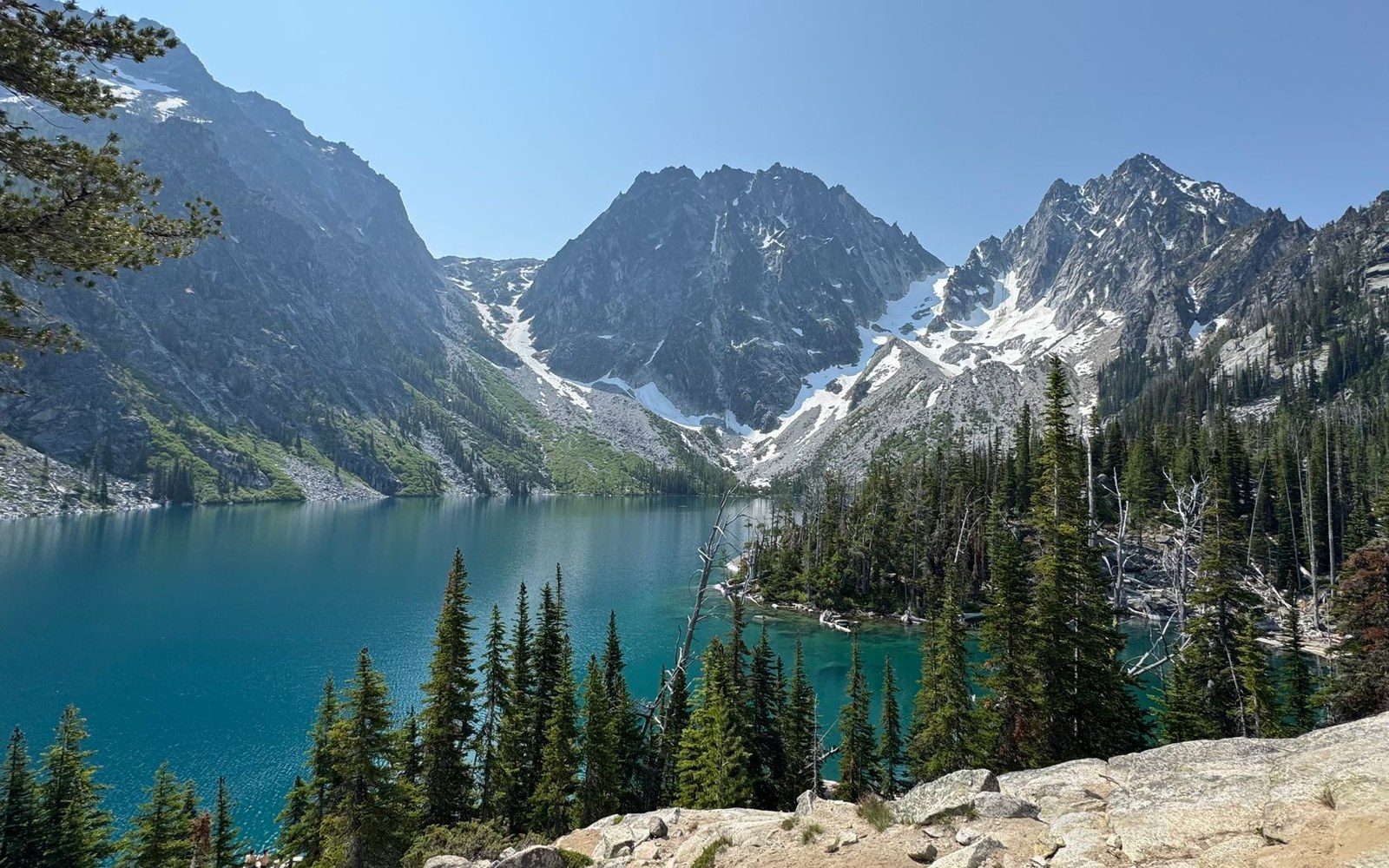
Photo: Nathan Steele / Pexels
The Naming Chain
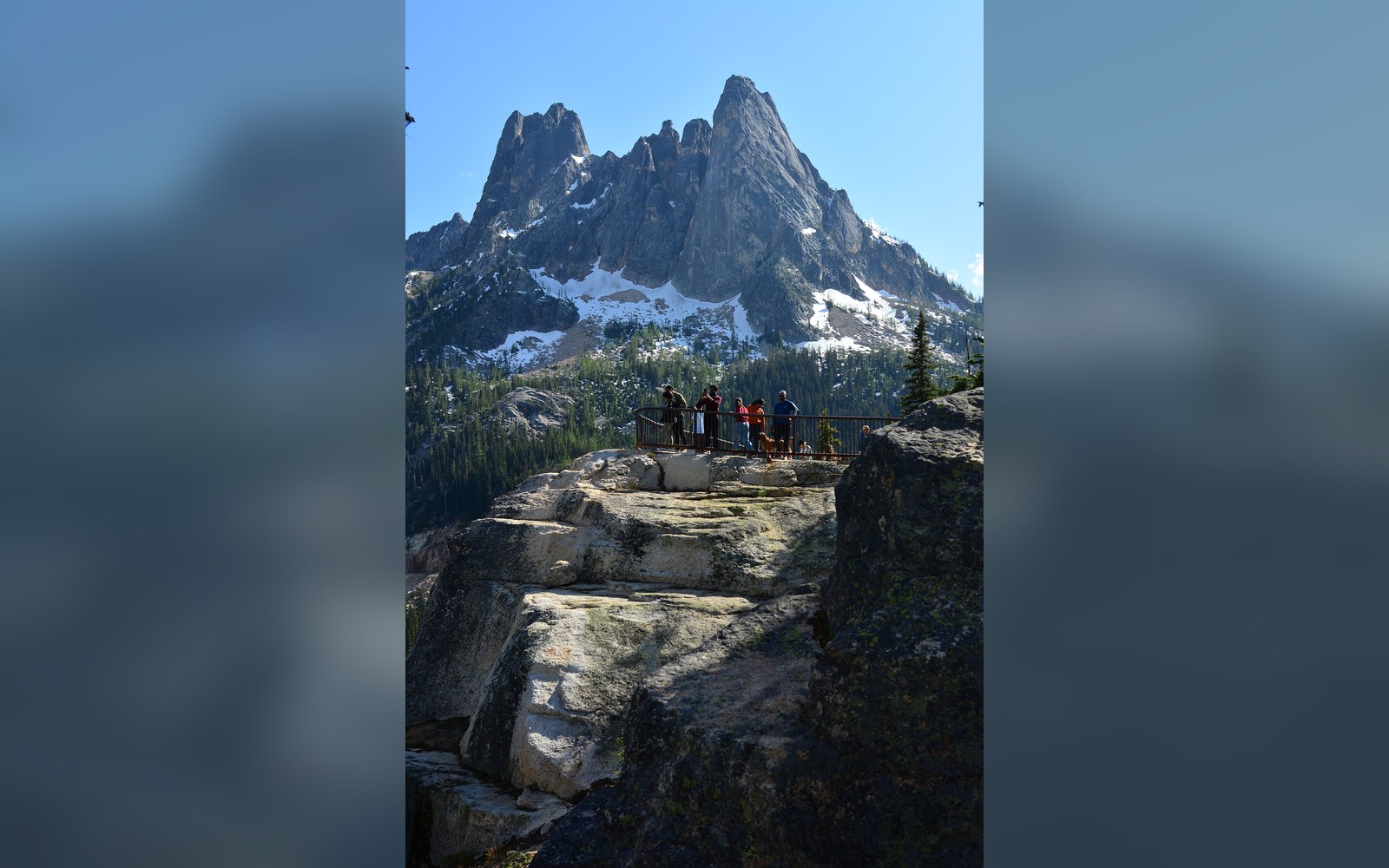
Prusik Peak rises above the upper Enchantments basin in the Alpine Lakes Wilderness, a jagged granite spire that stands apart from the broad slabs and scattered lakes of the basin floor. Its elevation places it firmly in the high terrain of the Stuart Range, where the Stuart batholith — the coarse-grained granitic intrusion that underlies the entire massif — produces rock of a particular quality: solid, rough-textured, and well-fractured along clean lines.
The peak's name does not commemorate a climber who stood on its summit. It commemorates a knot. The Prusik knot is a friction hitch — a loop of thinner cord wrapped around a main rope in a configuration that grips under load and slides when unweighted — invented by Austrian mountaineer Karl Prusik ↗ and described in print in 1931. The knot became standard equipment in alpine climbing through the mid-twentieth century, adopted widely enough that Prusik's surname entered the generic vocabulary of the rope: to prusik meant to ascend by that method. When Washington climbers named the spire, they named it for the technique, not the man directly — though the man is the source of both.
Karl Prusik himself had no documented connection to the Cascades. His knot arrived here the way most European technique did: through climbers who had trained on, or read about, Continental methods and carried them into new terrain.
Chronology
- 1931Karl Prusik's friction hitch described in published form
- 1948first ascent of Prusik Peak by Fred Beckey and Art Holben
- 1976Alpine Lakes Wilderness designation places the peak under U.S. Forest Service wilderness management
The First-Ascent Record
The first ascent of Prusik Peak is credited to Fred Beckey and Art Holben in 1948. The route they established ascended the peak's granite by what the record describes as technical rock climbing on a formation that, while compact within the broader Enchantments basin, presents genuine difficulty on its upper sections. Fred Beckey, whose documentation of Cascade summits and routes through the latter half of the twentieth century remains the authoritative baseline for Washington climbing history, recorded the peak and its approaches in the Cascade Alpine Guide series published through The Mountaineers Books.
The peak sits within terrain that became part of the Alpine Lakes Wilderness under the 1976 designation, which placed the Enchantments and the Stuart Range under U.S. Forest Service wilderness management. That designation did not alter the first-ascent record but it fixed the administrative context in which the peak's name would appear on federal maps going forward.
What the name ultimately carries is a compressed history: an Austrian hitch, a Pacific Northwest summit, and the habit climbers share of naming things for the tools that got them there ↗ — or, in this case, the tools that were simply always in the rope bag.
Naming chain
- Karl Prusik — Austrian mountaineer, inventor of the friction hitch bearing his name, described in print in 1931
- Prusik knot — a friction hitch used in ascending a rope; gave its name to the peak
- Prusik Peak — named for the knot, not directly for Prusik; sits in the upper Enchantments basin, Stuart Range, Alpine Lakes Wilderness
The peak's name does not commemorate a climber who stood on its summit.