Peaks & Routes·Reference entry
Forbidden Peak and the West Ridge Record
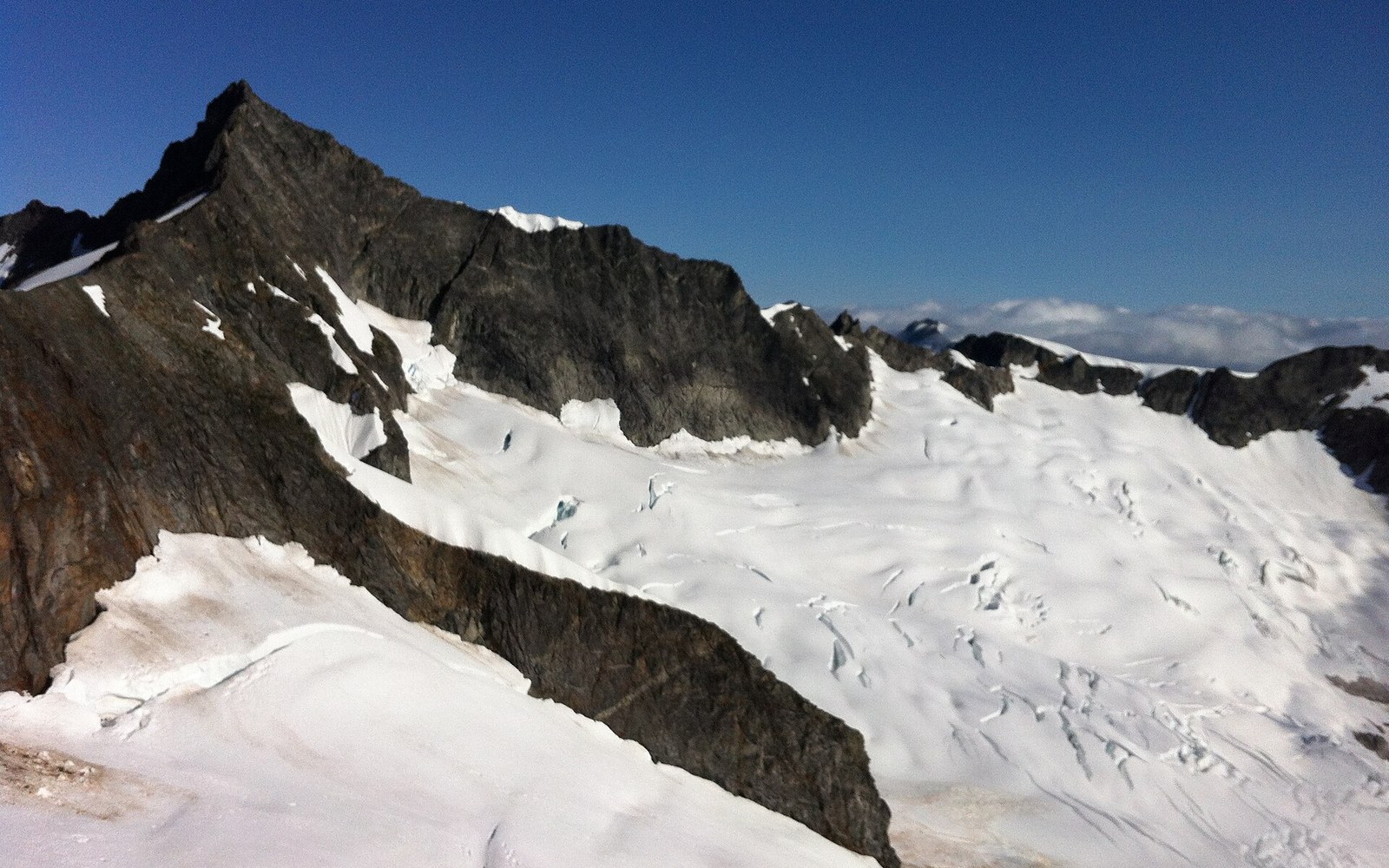
Photo: Forbidden and Boston Glacier · Wikimedia Commons
The Peak the Record Chose
Forbidden Peak stands at 8,815 feet in the heart of the North Cascades, a compact massif of gneiss and schist above Boston Glacier, its summit guarded on every side by glaciated approach terrain and steep rock. Mount Shuksan had been reached in 1906, Mount Baker in 1868, and both carried substantial written histories before Forbidden received its first ascent. Yet Forbidden Peak — climbed for the first time in 1940, by a party including Lage Wernstedt and four companions — became the North Cascades' reference point for alpine rock climbing in the decades that followed. The reasons belong to geology, route character, and the particular moment in American mountaineering that the West Ridge represents.
The 1940 first ascent was recorded by The Mountaineers and entered the institutional record that would eventually feed Fred Beckey's Cascade Alpine Guide, the three-volume series that remains the primary documentary source for Washington climbing history. Beckey's own climbs and writings shaped how the range was read, and Forbidden appeared in his pages as a route problem of unusual seriousness: not a glacier walk, not a scramble, but a sustained combination of ice approach, exposed ridge, and technical rock at elevation. That combination — what the climbing record calls an alpine route — is precisely what distinguishes Forbidden from its taller or more famous neighbors.
Chronology
- 1868First ascent of Mount Baker, by Edmund Coleman's party
- 1906First ascent of Mount Shuksan
- 1940First ascent of Forbidden Peak, party including Lage Wernstedt
- 1968North Cascades National Park established, enclosing Forbidden Peak's drainage
The West Ridge as a Named Line
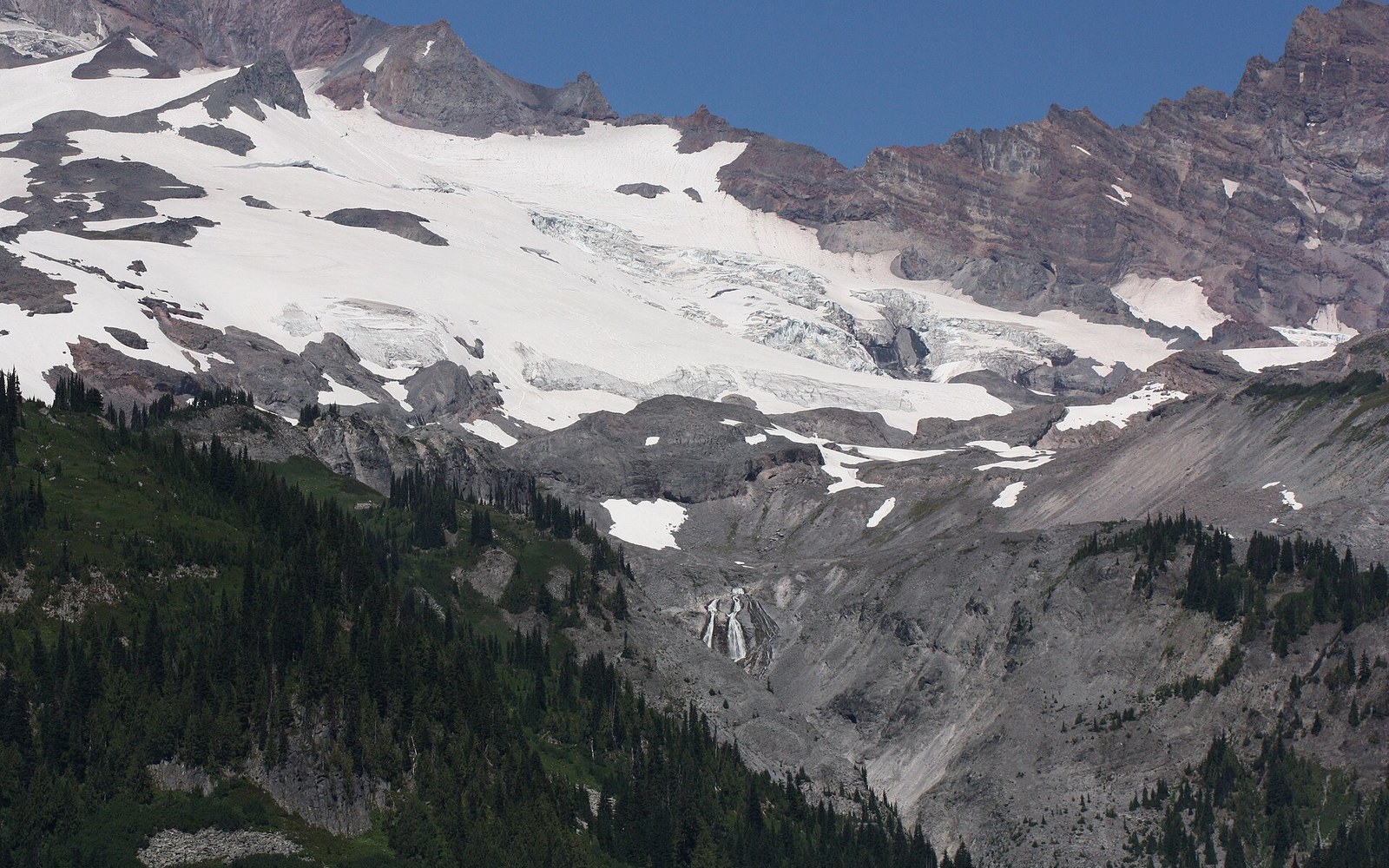
The West Ridge of Forbidden Peak enters the record as the mountain's definitive route not only because it was the line of the 1940 first ascent, but because of what it demands across its full length. The ridge begins above the Coleman Glacier approach and rises through mixed terrain to a summit headwall where the rock steepens and the exposure is sustained. Every intermediate anchor, every transition from snow to rock, is consequential. The route became the standard against which North Cascades technical alpine climbing measured itself through the 1950s and 1960s, when Washington climbers including Pete Schoening and the generation that would later carry the American flag on Himalayan expeditions were refining their skills in the range.
The West Ridge's reputation rests on its consistency. Unlike routes that have a single crux and easy ground elsewhere, the ridge holds difficulty across most of its length, with corniced sections and rock bands that require route-finding under conditions that change quickly. This is not a mountain that forgives inattention at any single point, which is why the record on Forbidden Peak is notably serious compared to peaks of similar elevation elsewhere in Washington.
The geological character of the peak contributes to that seriousness. Forbidden is built from the metamorphic rock — gneiss and schist — that underlies much of the most rugged terrain in North Cascades National Park, established in 1968 to protect, among other things, the drainages immediately surrounding the peak. This rock type, transformed by heat and pressure over geological time, produces a different climbing surface than the granite of the Stuart Range or the Index batholith: less featured, more variable in quality, and highly dependent on conditions for reliable protection.
What makes Forbidden distinct
- Sustained mixed terrain (glacier approach, exposed ridge, technical rock headwall) across the full route length
- Metamorphic rock (gneiss and schist) — variable quality, highly condition-dependent
- No commercial guide infrastructure comparable to Rainier; no straightforward walk-up option
- West Ridge established as the defining line by Cascades-era climbers including Pete Schoening's generation
Why Forbidden, Not Baker or Shuksan
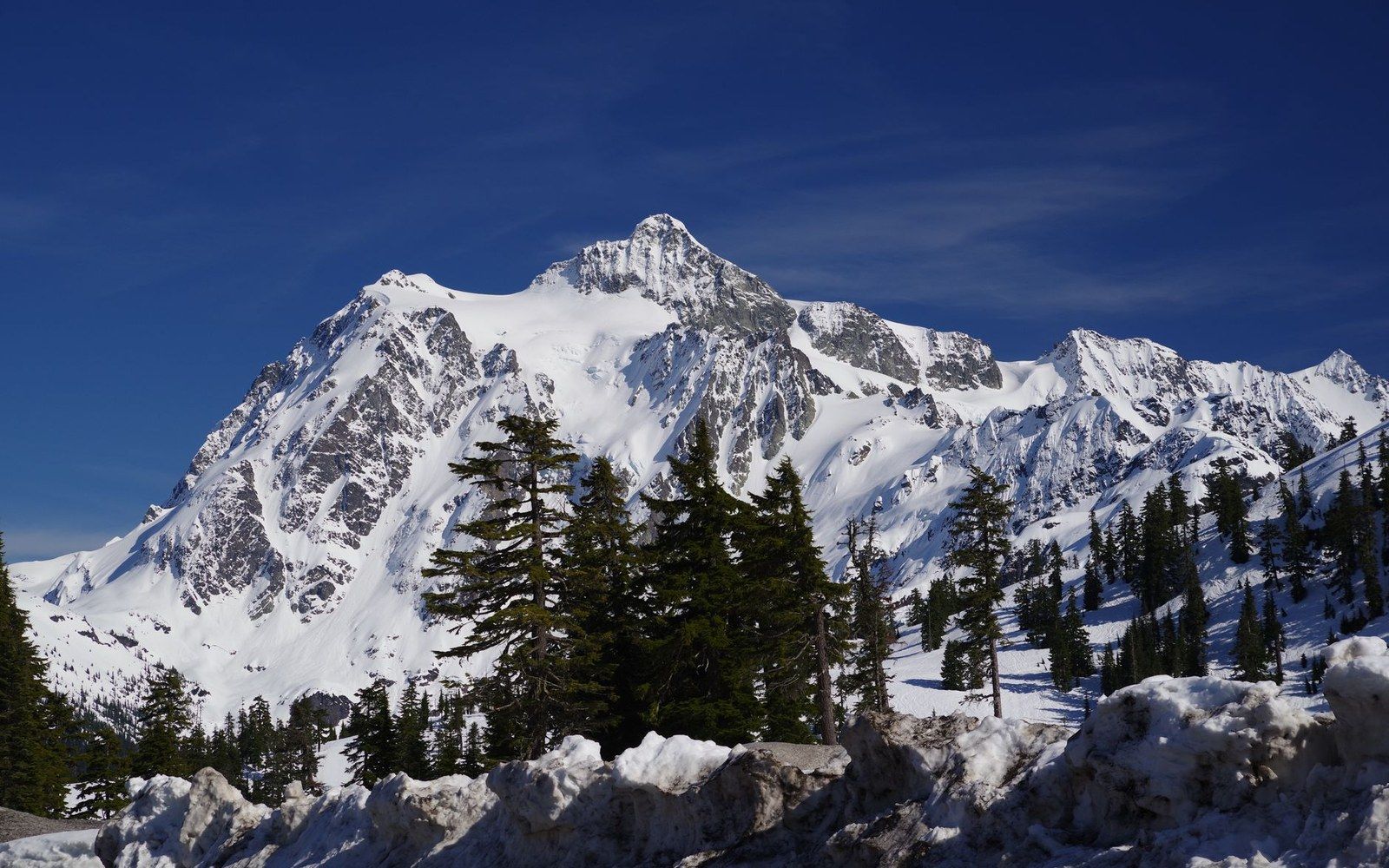
Mount Baker's 1868 first ascent by Edmund Coleman and a small party was a notable achievement in Pacific Northwest exploration, but the route via the Easton or Coleman-Deming glaciers is a glaciated walk at the technical level of the historical record. Shuksan's striking profile and metamorphic rock have drawn climbers for a century, but the standard routes do not present the same sustained technical engagement as Forbidden's West Ridge. The comparison is not about difficulty in a graded sense; it is about what each mountain represents in the documentary record of Washington alpinism.
Forbidden Peak became the reference point because it answered a specific question: what does a serious North Cascades alpine route look like when it combines ice travel, exposed rock, and sustained commitment without the buffer of a large commercial guide operation or a well-worn trail to the base? The answer, preserved in Beckey's guide and in the first-ascent record, is a mountain that has never been casual about the terms it sets. That is the argument the record has made, consistently, since 1940.
That combination — what the climbing record calls an alpine route — is precisely what distinguishes Forbidden from its taller or more famous neighbors.