Crags·Reference entry
Outer Space and the Wall It Finishes On
Snow Creek Wall above the Icicle Creek drainage carries one of Washington's most-cited granite routes — a first-ascent record that doubles as a portrait of a particular moment in Cascade climbing.
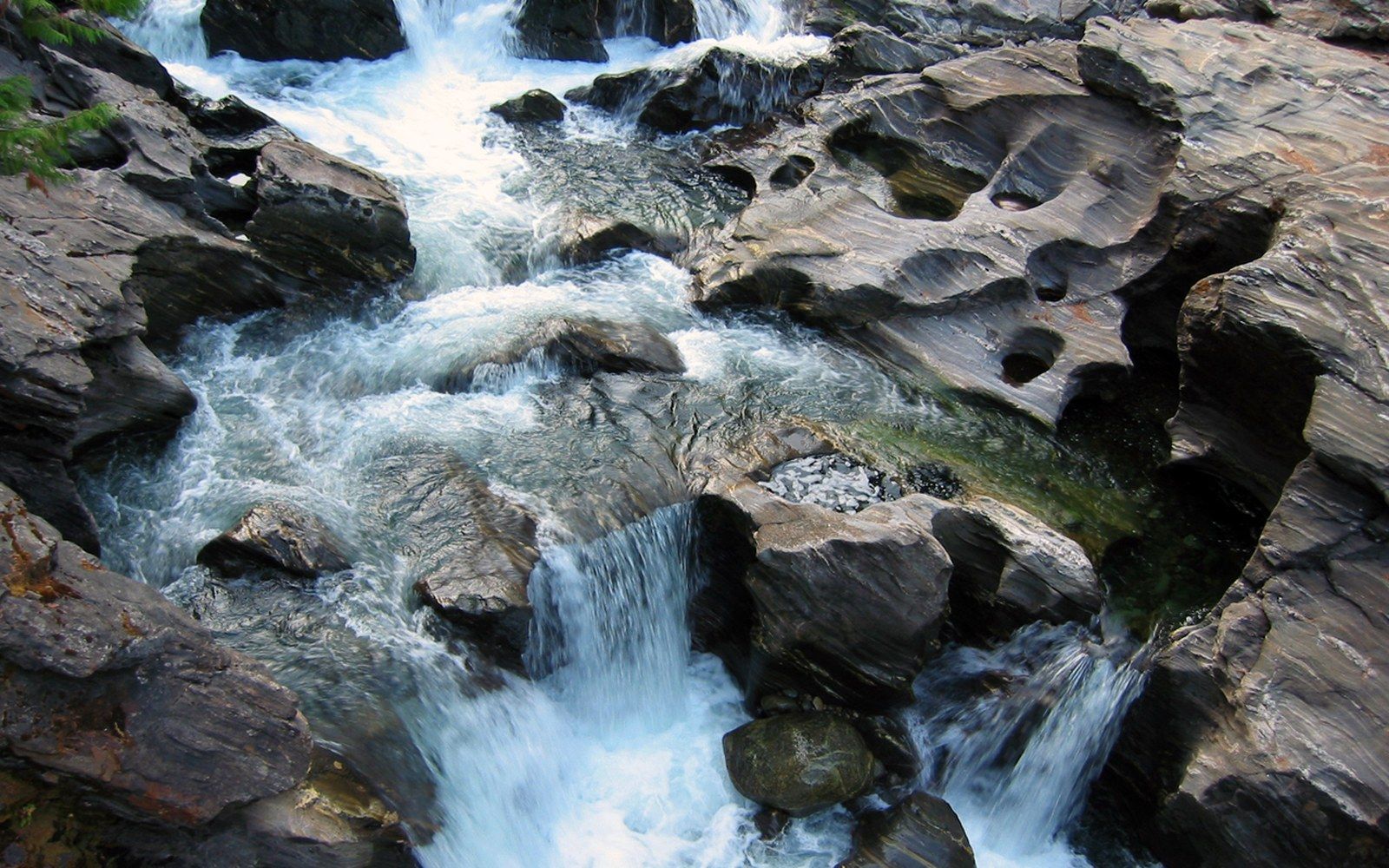
Photo: Icicle Creek Rapids · Wikimedia Commons
The Wall Above the Creek
Snow Creek Wall rises above the Icicle Creek Canyon south of Leavenworth, a sweep of granite that belongs to the Stuart batholith — the same coarse intrusive mass that builds Mount Stuart and its range to the south. The rock here is pale and crystalline, offering the friction and edge holds that granite climbers prize, and the wall's aspect catches enough sun to keep it climbable across a long season. As a named crag within Washington's climbing geography, it sits between the roadside convenience of Castle Rock in Tumwater Canyon and the high-alpine seriousness of the Stuart Range proper — closer to a crag in character, but large enough to host routes of genuine ambition.
The wall is not a wilderness objective by any strict measure. The approach follows the Snow Creek drainage and rises through forest before the granite opens above treeline. What greets a party there is a face of several hundred feet, continuous enough to demand route-finding decisions and long enough to accumulate consequence. Its position in the record reflects that character: the routes documented on Snow Creek Wall are not scrambles or single-pitch affairs, but sustained multi-pitch climbs that require commitment and read, in the historical register, as serious undertakings.
Chronology
- 1959first ascent of Outer Space, Snow Creek Wall, by a party including Fred Beckey
- Late 1950sspace-race naming fashion reaches Washington climbing culture
- Pre-1959Castle Rock and Icicle Creek Canyon already established as primary Leavenworth climbing district
Outer Space in the Record
Outer Space is the route most associated with Snow Creek Wall in the first-ascent literature. The line was first climbed in 1959 by a party that included Fred Beckey, who was already the dominant figure in Washington first ascents by that date and would remain so for decades. The route's name belongs to a naming fashion of the late 1950s — the space race was providing a new vocabulary for American climbers, and names like Outer Space signaled ambition, novelty, and a certain cultural moment as much as they described the rock itself.
The Cascade Alpine Guide, Beckey's three-volume documentation of the range, records the route and its first-ascent party with the specificity that distinguishes the guide as a primary source rather than an advisory document. In Beckey's account, the climb is a multi-pitch granite route on sound rock, ascending the wall by a line that takes advantage of a crack system running through the upper face. The grade placed it among the harder free climbs in Washington at the time of its first ascent, and it remained a benchmark in the Leavenworth area for years afterward.
What makes Outer Space significant as a historical document is less the difficulty than the moment it captures. By 1959, Washington climbers had been developing the Icicle Creek Canyon for over a decade, with Castle Rock receiving early attention and the Leavenworth area consolidating as the state's primary rock-climbing district. Snow Creek Wall represented a natural extension of that development — a larger canvas demanding longer routes and more sustained technical climbing. Outer Space, as the wall's signature line, marks the point at which Snow Creek Wall entered the named record.
Geology note
- Stuart batholith — coarse, pale granite intrusion underlying Snow Creek Wall and the Stuart Range; friction-friendly surface character central to the area's climbing history
The Route as Document
Routes on granite walls acquire their meaning partly from the rock they traverse and partly from the moment they were recorded. The Stuart batholith's coarse, friction-friendly granite made the Icicle Creek crags the training ground for a generation of Washington climbers who went on to Himalayan expeditions — Pete Schoening and Willi Unsoeld among them — and the technical skills built on walls like Snow Creek fed directly into those larger ambitions. The Mountaineers, as both an institution and a publisher, documented this progression in print, giving named routes like Outer Space a permanence in the record that oral tradition alone could not provide.
Snow Creek Wall remains a named place in Washington's climbing geography because of the routes documented on it, and Outer Space remains the route that anchors the wall's identity in that record — a single line of granite holding the date of its first ascent, the name of the climber who led it, and the particular character of a state's climbing culture at the edge of the 1960s.
- ●Mount Erie
- ●Index
- ▲Snow Creek Wall
- ●Castle Rock
- ●Peshastin Pinnacles
- ●Exit 38
- ●Frenchman Coulee
- ●Royal Columns
The approach follows the Snow Creek drainage and rises through forest before the granite opens above treeline.